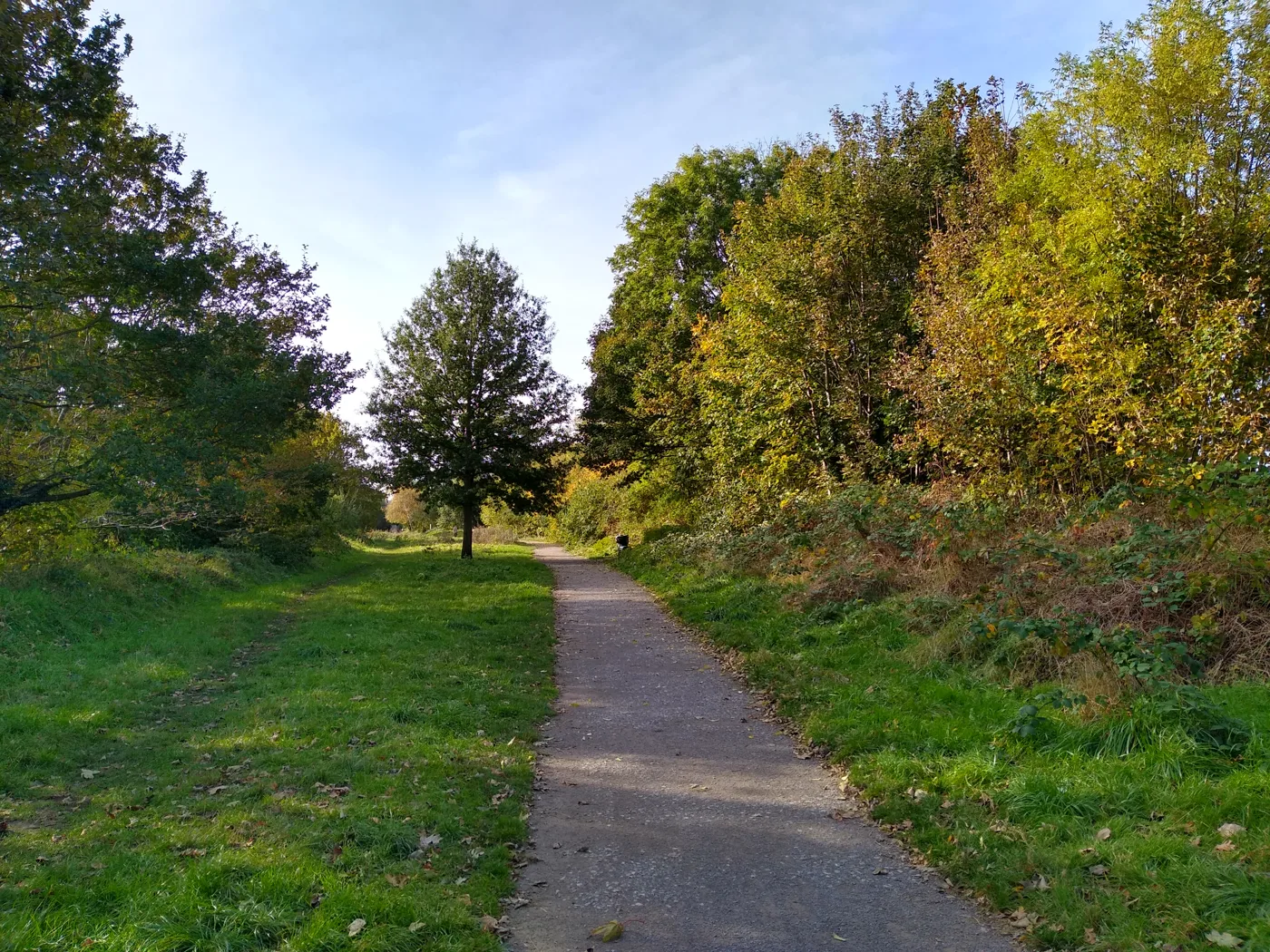

The Friends' Apple Day on Saturday 12 September marks 20 years since the council named the park. It was a working railway until the last train ran in 1997.
Addiscombe Railway Park holds its Apple Day on Saturday 12 September, and the Friends group is marking it as the park’s twentieth year. Their own events calendar lists the day as “Apple Day Event Celebration of Railway Park 20 Years Old” (Friends of Addiscombe Railway Park).
The Friends have not published a start time. Their calendar carries the date only, so check it, or their social media, before setting off.
The apples come from the park’s own orchard, which the Friends planted at the East India Way end on 10 January 2016. The community garden followed on 10 May that year.
Twenty years since it got its name
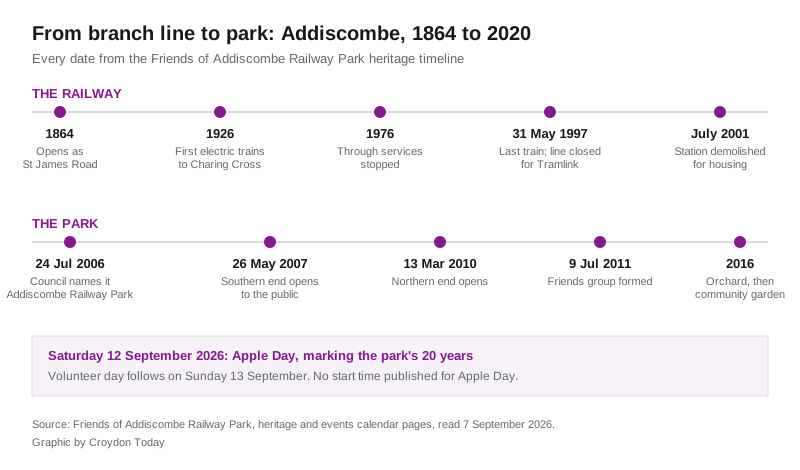
The anniversary is of the naming, not the opening. Croydon Council named the strip of land Addiscombe Railway Park at an informal Cabinet meeting on 24 July 2006. Everything before and after that is recorded on the Friends’ own heritage timeline:
- 11 September 2004: a walkabout to review the property
- 13 November 2004: a public meeting about the plans
- 24 July 2006: the council names it Addiscombe Railway Park
- 21 to 23 November 2006: trees planted on the southern phase during National Tree Week
- 26 May 2007: the southern end, East India Way to Dalmally Passage, opened by the mayor, Councillor Derek Millard
- 13 March 2010: the northern end, Dalmally Passage to Blackhorse Lane, opened by the deputy mayor, Councillor Russell Jackson
- 9 July 2011: residents form the Friends of Addiscombe Railway Park
- January 2020: both Blackhorse Lane railway bridges replaced, and the northern half reopens
Before that, it was a railway for 133 years
The park is built on the trackbed of the branch to Addiscombe station, and the station changed its name five times in ninety years (Friends of Addiscombe Railway Park heritage timeline):
- 1864: opens as St James Road Station
- 1899: rebuilt and renamed Addiscombe Road Station
- 1925: carriage sheds built alongside, renamed Croydon (Addiscombe)
- 1926: the first electric trains run to Charing Cross, renamed Addiscombe (Croydon)
- 1955: renamed Addiscombe Station, and stays that way
The decline is recorded just as precisely. The goods yard closed in 1968. Through services stopped in 1976, because passengers preferred the faster trains from East Croydon. The line and station closed in 1997 so that Tramlink could use part of the route for the Beckenham service, and the last train left on 31 May 1997. The station itself was demolished at the start of July 2001 to make way for housing.
So the tram you catch at Blackhorse Lane runs on part of the reason this park exists.
What it means for you
If you want to go on Saturday, the honest position is that the date is confirmed by the organisers and the time is not. The Friends’ calendar is the place to look, and it is updated as dates are announced.
If you would rather help than visit, the Friends run regular sessions and publish the times:
- volunteer days: the second Sunday of every month, weather permitting, 2pm to 5pm from April to October and 1pm to 4pm from November to March
- community garden: Thursday evenings, 6pm to 7pm, every week from April to September
The next volunteer day falls on Sunday 13 September, the day after Apple Day.
The park runs between East India Way and Blackhorse Lane in Addiscombe. Our things to do in Croydon page has more days out across the borough, and roadworks and travel covers this week’s closures if you are driving over.
Sources
- Friends of Addiscombe Railway Park: events calendar (Apple Day on Saturday 12 September 2026 described as a celebration of the park’s 20 years, the volunteer day on Sunday 13 September, and the monthly and weekly session times)
- Friends of Addiscombe Railway Park: heritage (the railway timeline from 1864 to 2001, the park timeline from 2004 to 2020, the orchard planted 10 January 2016 and the community garden created 10 May 2016)
Have your say