
London Bridge in 14 minutes, Victoria in 16, and trains through most of the night. Times from East and West Croydon, 2026 fares and the last train home.
Croydon’s trains are the strongest card the borough holds. East Croydon is the busiest National Rail station in London outside zones 1 and 2, sitting on the Brighton Main Line where nearly everything heading for the south coast has to pass, and that geography buys residents a service most of outer London can only envy: London Bridge in 14 minutes, Victoria in 16, around fifteen trains an hour into the centre off-peak, and departures running through most of the night. This page sets out the real journey times from East and West Croydon, how early and late you can travel, and what commuting actually costs in 2026, with a link to every source so you can check it.
The quick version
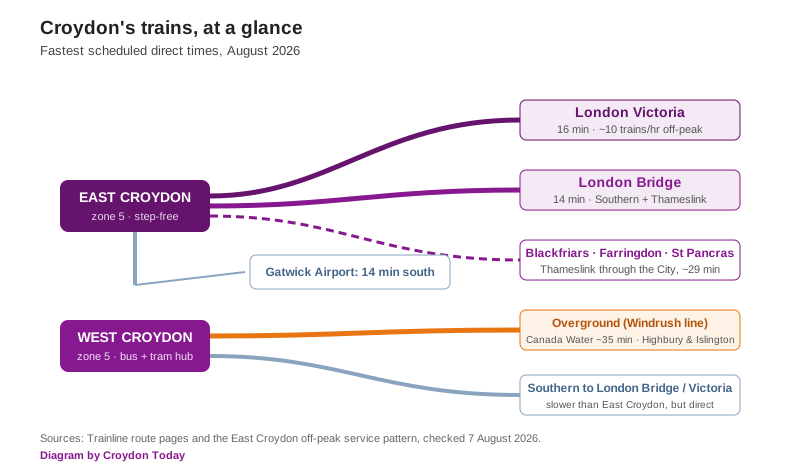
East Croydon is the main event: Southern runs about 10 trains an hour to Victoria off-peak, with the fastest reaching it in 16 minutes, plus 5 an hour to London Bridge, fastest in 14 minutes, and Thameslink adds 4 an hour through London Bridge and the City towards Bedford (East Croydon service pattern; Trainline). West Croydon, at the other end of the town centre, is the quieter option: the southern terminus of the London Overground’s Windrush line plus Southern trains to Victoria and London Bridge (West Croydon services). Both stations are in fare zone 5 and take Oyster and contactless.
Where the trains go, and how long they take
Victoria (for the West End)
Southern’s core route. The fastest trains take 16 minutes, a typical journey is around 26 minutes depending on stopping pattern, and there are roughly 192 trains a day (Trainline). Off-peak that works out at about ten an hour (service pattern).
What it means for you: fast non-stop runs and slower stoppers share the same platforms. Picking the non-stop train saves ten minutes; on this route it is worth checking the next two or three departures rather than boarding the first thing shown.
London Bridge, and through the City (Thameslink)
For the City side, trains reach London Bridge in 14 minutes at their fastest, with around 236 trains a day between Southern and Thameslink (Trainline). Thameslink services continue through the core, calling at Blackfriars, City Thameslink, Farringdon and St Pancras International, with direct runs to St Pancras from about 29 minutes (Trainline). Farringdon puts you one stop from the Elizabeth line for Canary Wharf or Heathrow.
What it means for you: if your office is near Blackfriars or Farringdon, Thameslink saves the Tube change entirely. These trains run right through, so a Croydon commuter can be at St Pancras for a Eurostar without touching the Underground.
West Croydon (Overground and the slower Southern runs)
West Croydon is a southern terminus of the Windrush line, running via Crystal Palace and New Cross Gate to Canada Water, Shoreditch and Highbury & Islington, alongside Southern services to London Bridge, Victoria and down to Sutton (West Croydon station). It is the right station for Shoreditch, Dalston and the East London tech corridor, where the Overground beats any terminal-plus-Tube combination.
Gatwick, in less time than the Tube to work
The same main line runs south: Gatwick Airport is 14 minutes from East Croydon, with around 308 trains a day between Southern, Thameslink and Gatwick Express (Trainline). For most of the borough, the airport is genuinely closer in time than central London.
How early and how late can you travel?
This is where East Croydon is close to unique in outer London. The last train from Victoria back to East Croydon leaves around 02:16, and the first of the new day departs around 03:10; in the other direction the first departure to Victoria is around 02:36 (Trainline). The Brighton Main Line barely sleeps: on most nights the gap without a train is around an hour.
What it means for you: a night out in town does not need a night bus home. But engineering work, especially at weekends, rewrites the small hours first, so check live times on the day before relying on a 2am train.
What commuting costs in 2026: contactless vs season ticket
Both stations are in zone 5, so commuters have two genuinely different ways to pay.
Tapping contactless, pay-as-you-go is capped at £15.30 a day and £76.40 Monday to Sunday for zones 1 to 5 (TfL adult fares, 2026). The caps cover Tube, bus and tram travel too, and you only pay for days you actually travel.
On season tickets, an annual from East or West Croydon to the London terminals is £2,160 on the cheapest any-route ticket (weekly £54.00, monthly £207.40), or £2,312 for the Victoria-route ticket (Trainline season tickets). An annual zones 1 to 5 Travelcard, adding unlimited Tube, bus and tram across London, is £3,056 (TfL).
The backdrop helps: regulated fares, including standard-class season tickets, are frozen until March 2027, the first freeze in around 30 years (National Rail). TfL’s own fares and caps are set separately and are not covered by the freeze.
| How you pay | Cost | Best for |
|---|---|---|
| Contactless, 3 days a week | about £2,070 a year (45 weeks at the £15.30 daily cap or less) | Hybrid workers; includes Tube, bus and tram on travel days |
| Annual season, rail only | £2,160 (any permitted route) | Five-day commuters who rarely use the Tube |
| Annual Travelcard, zones 1–5 | £3,056 | Five-day commuters who ride the Tube, bus or tram daily |
What it means for you: at three days a week or fewer, contactless caps almost certainly beat a season ticket, with no wasted weeks. At five days with daily Tube travel on top, price the Travelcard against season-plus-caps before renewing.
Accessibility, and the trams
East Croydon is fully step-free, with ramped access to every platform (station facilities); West Croydon is also listed as accessible (West Croydon station). Both connect directly to the tram network for the last mile across the borough, though note the town-centre tram loop is closed for track renewal until 30 August 2026; our roadworks and travel page has the detail.
Frequently asked questions
How long is the train from Croydon to London?
The fastest trains from East Croydon reach London Bridge in 14 minutes and Victoria in 16 minutes (Trainline). Typical journeys are 20 to 30 minutes depending on the stopping pattern.
How often do trains run from East Croydon?
Constantly: about 10 trains an hour to Victoria and 5 to London Bridge off-peak, plus 4 Thameslink trains an hour through the City (service pattern). Across all routes that is one of the densest services of any suburban station in Britain.
What time is the last train from London to Croydon?
Later than almost anywhere: the last Victoria departure for East Croydon is around 02:16, with the first of the new day around 03:10 (Trainline). Check the day’s timetable at weekends, when engineering work is common.
Can I use Oyster or contactless at East Croydon?
Yes. Both East and West Croydon are in zone 5, with pay-as-you-go capped at £15.30 a day and £76.40 a week for zones 1 to 5 (TfL fares). Touch in and out on the yellow readers.
How much is a Croydon to London season ticket?
An annual season from East or West Croydon to London is £2,160 on the any-route ticket, with a weekly at £54.00 (Trainline). Regulated fares are frozen until March 2027 (National Rail).
Which Croydon station should I use for Shoreditch or Dalston?
West Croydon: it is the terminus of the Overground’s Windrush line, which runs direct through Canada Water and Shoreditch High Street to Highbury & Islington (West Croydon station).
Sources
- Trainline: East Croydon to London Victoria, to London Bridge, to St Pancras, to Gatwick Airport and Victoria to East Croydon (journey times, frequencies, first and last trains)
- East Croydon station and West Croydon station (off-peak service pattern, zones, accessibility, ridership)
- Trainline: East Croydon season tickets (weekly, monthly and annual prices)
- TfL adult fares 2026 (PDF) (pay-as-you-go caps and Travelcard prices)
- National Rail: the fares freeze (regulated fares frozen until March 2027)
Times and prices change, especially at weekends and during engineering work; check live times and price your exact journey before you travel. The commute is a big part of what homes here cost; our other guides cover parking in Croydon and Croydon bin collection days. Last updated August 2026.
Have your say