
Croydon's high needs budget overspends by £45m this year, and the council's own report puts the deficit at £96m when the statutory override ends in 2028.
Croydon is on course for a £96m deficit on the money it spends supporting children with special educational needs, at the moment the accounting rule that keeps that deficit off its books runs out. The figure is the council’s own, published in a report to Cabinet on Wednesday.
Most of the coverage of that meeting will be about the £2.3m forecast overspend on the general fund. That is the small number in the report. The large one sits a few pages further in.
The number that matters
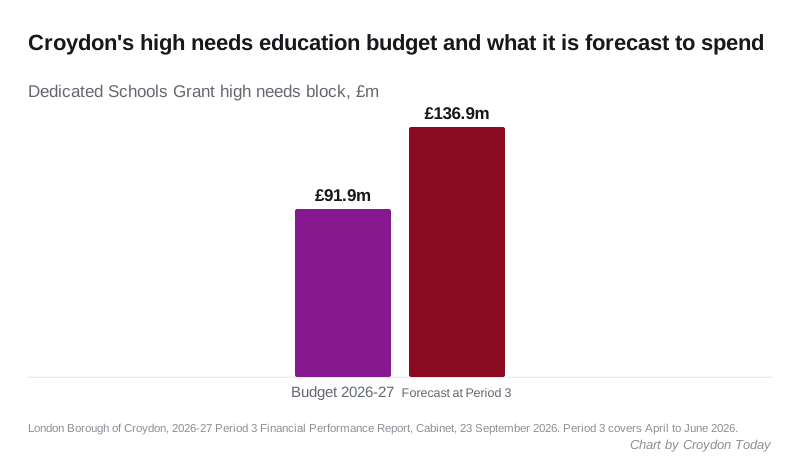
Croydon’s high needs block, the part of the Dedicated Schools Grant that pays for education, health and care plans and specialist places, has a budget this year of £91.9m. At the end of June it was forecast to spend £136.9m.
That is an overspend of £45.0m, or 49 per cent, on a single block of funding (2026-27 Period 3 Financial Performance Report, paragraph 1.4 and the summary table).
Why the deficit does not show up in the council’s accounts
Overspends on the high needs block do not work like other overspends. They pile up in a separate account, and a government rule called the statutory override keeps them from being charged to the council’s general reserves.
The report sets out where Croydon stands:
- the deficit on the DSG adjustment account at 31 March 2026 was £67.5m, or £57.6m once the reserve held against it is counted
- the High Needs Stability Grant, announced on 9 February 2026 alongside the local government finance settlement, will fund 90 per cent of eligible deficit up to 31 March 2026, which the council puts at about £52m
- that leaves a residual deficit of about £6m
- the statutory override runs to the end of 2027-28
Then comes the arithmetic. Assuming that £6m residual, plus a £45m overspend in each of 2026-27 and 2027-28, the council says it “would face a deficit of £96m on the DSG, at the point the statutory override ends” (paragraph 5.21).
The report does not present that as a worst case. It says the cumulative deficit “is currently forecast to continue to grow annually”, because demand for education, health and care plans keeps rising, and adds that there is “currently no guarantee” the Department for Education will keep funding the majority of ongoing deficits beyond this year.
The rest of Wednesday’s report
Cabinet was asked to note, not to fix. The headline positions at Period 3, which covers the year to the end of June:
- the general fund revenue budget of £485.4m is forecast to spend £487.7m, an overspend of £2.3m, an improvement of £0.8m on the month before
- the Housing Revenue Account is forecast to overspend by £3.9m
- the general fund capital programme is forecast to underspend by £13.7m against a revised budget of £256.7m, and the HRA capital programme by £14.6m
- savings of £26.5m are forecast against a £34.7m target, 76.4 per cent
- the budget balances only with £119m of capitalisation directions from government
By directorate, Adult Social Care and Health is forecast to underspend by £1.2m and the Assistant Chief Executive directorate by £0.3m. Housing and Resources are forecast to balance. Children, Young People and Education is £3.4m over on a £165.1m budget, and Place is £2.0m over on £76.8m.
Inside the children’s overspend, the report gives one figure worth holding on to: in June the council’s most expensive single placement cost £14,004 a week, which is £0.7m a year for one child.
Cabinet also recorded that the government’s policy of holding housing benefit subsidy for temporary accommodation at 90 per cent of the 2011 Local Housing Allowance rates costs Croydon about £45m a year on its own.
What it means for you
Nothing on your council tax bill changes because of this report. It is a forecast, taken three months into the year, and the council says directorates are expected to find mitigations before March.
What it does tell you is where the pressure is going to come from. The council’s Financial Strategy 2027-30, presented to Cabinet in July and summarised in Wednesday’s report, said Croydon has to show it has taken all reasonable steps on its own finances before asking government to do anything about its historic debt. The two places it named for “demand management” were social care and SEND.
That is the same high needs block now forecast to overspend by £45m a year. If the statutory override ends in 2028 with a £96m deficit still on the adjustment account, and the stability grant does not continue, that becomes a live problem for the general fund, which is the budget your council tax pays into.
The practical version for households: the report is the earliest published warning of where the next round of savings will be looked for. Our guide to Croydon council tax bands sets out what you currently pay, and the council is separately consulting on cutting council tax support for working age residents from April 2027, agreed at the same Cabinet meeting.
Cabinet’s decisions on the report come into force on 2 October unless they are called in. The call-in deadline is 1 October (decision 2800).
Sources
- London Borough of Croydon, 2026-27 Period 3 Financial Performance Report, Cabinet, 23 September 2026 (all budget, forecast and deficit figures)
- London Borough of Croydon, Decision 2800: 2026-27 Period 3 Financial Performance Report (the resolutions and the call-in dates)
Have your say