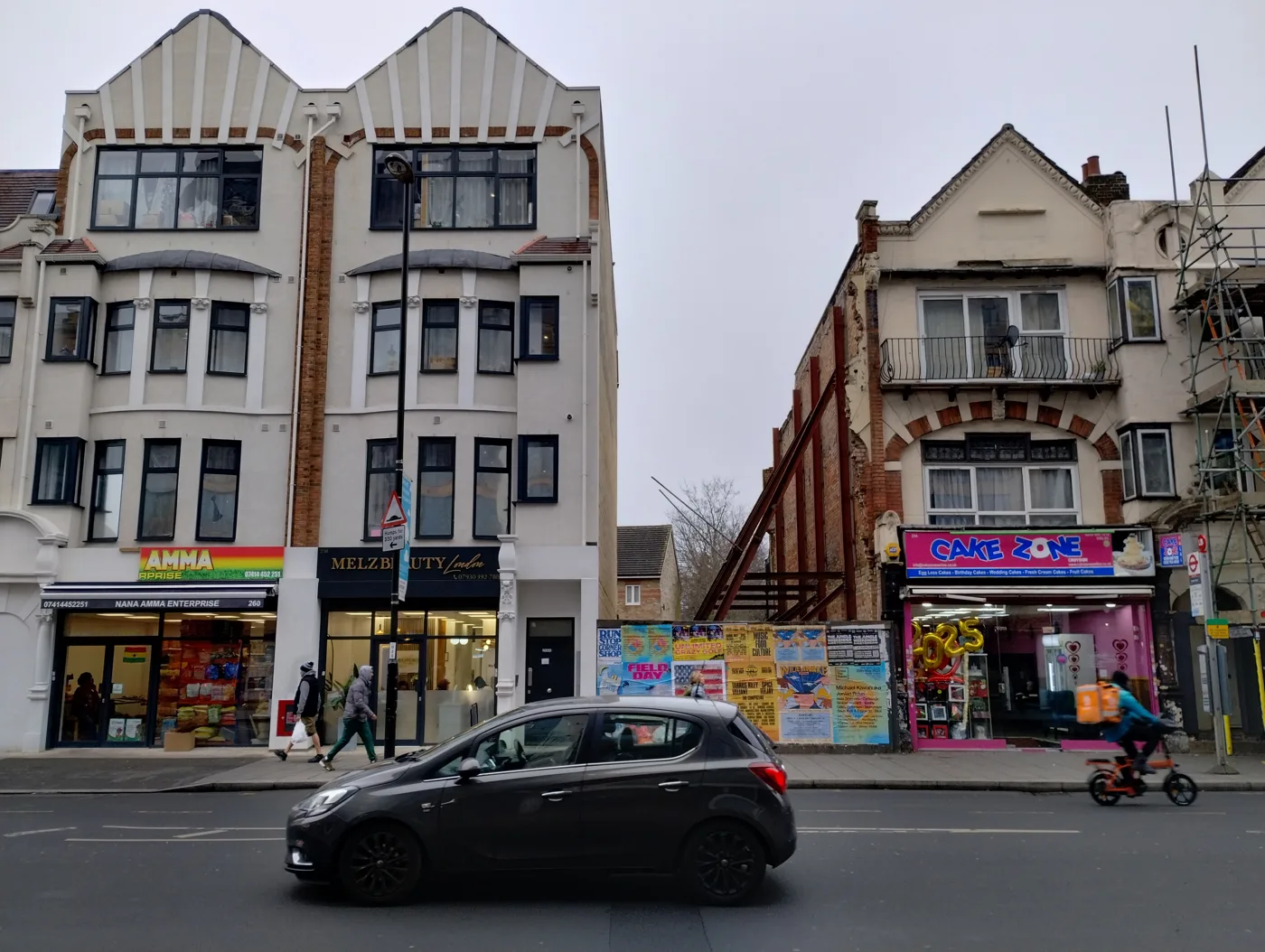

Alison Johnson will chair the board deciding how £20m is spent around Croydon University Hospital. The plan is due at Westminster by 26 February 2027.
The board that will decide how £20m of government money is spent in the streets around Croydon University Hospital has a chair. Alison Johnson, a Croydon resident of more than 30 years, was named on Friday 4 September.
She now has under six months to get a plan written. The government’s deadline for the plan is 26 February 2027.
The money comes from the Pride in Place Programme, run by the Ministry of Housing, Communities and Local Government. Croydon Council says the funding covers public spaces in West Thornton, Broad Green, Bensham Manor and Selhurst, and that Ms Johnson was chosen through a competitive process involving local residents, Executive Mayor Jason Perry and Croydon West MP Sarah Jones (Croydon Council).
Why this bit of Croydon, and not another
The government picked the area on 20 March 2026. In its own list it is not called Thornton Heath or Broad Green. It is called “University Hospital & Queen’s Road”, and it is one of 40 neighbourhoods in England chosen that day, out of 6,856 (MHCLG).
The selection was mechanical, and the method is published. It ran in five steps:
- every neighbourhood in England was ranked on a combined score from the Index of Multiple Deprivation 2025 and the Community Needs Index 2023, weighted equally
- any constituency that had already had Pride in Place money was ruled out, so only one neighbourhood per constituency is funded
- every council in England was ranked on a single question from the Community Life Survey 2024/25: whether people in your neighbourhood pull together to improve it
- only neighbourhoods inside the 20% of councils with the weakest answers to that question stayed in the pool
- the 40 most in need of those were chosen
That third and fourth step is the part worth pausing on. Croydon qualified in part because it sits in the bottom fifth of English councils for residents saying their neighbours pull together. The government added the filter for this round specifically to target places where, in its words, community cohesion is weakest.
Seven London boroughs took ten of the 40 places. Barking and Dagenham, Brent and Enfield were each given two neighbourhoods. Bexley, Croydon, Greenwich and Newham were each given one.
The clock, and what has already slipped
The programme runs for ten years and pays out gradually, up to £20m for the neighbourhood. The dates that matter now are close together (MHCLG prospectus, updated 1 September 2026):
- 28 August 2026: every board in the 40 places named in March had to be in place and its membership confirmed with the ministry. The prospectus says “at the latest, but the sooner the better”.
- 4 September 2026: Croydon announced its chair, a week after that date.
- 26 February 2027: the 40 boards submit their Pride in Place Plan to the ministry for assessment and approval.
The council’s announcement does not say when the wider board membership was confirmed with the ministry, or whether recruitment to it has started. What it does say is that further information about getting involved “will be shared in the coming months”.
What the board has to look like
This is not a council committee, and the rules on who sits on it are strict:
- it is led by an independent chair, appointed and approved by the local MP and the council
- it must include the local MP and at least one ward councillor
- more than half the members must live or work in the neighbourhood
- there must be more residents than elected representatives on it
- by year three the board has to move to a community-led delivery model, which can mean becoming a co-operative, a community interest company, a community benefit society or a charity, or handing delivery to an established local organisation
The plan the board writes has to show evidence of extensive engagement with the community, not just a list of projects.
Who Alison Johnson is
The council describes her as a faith leader, educator, trainer and advocate who has lived in Croydon for over 30 years. It says she has served as chair of governors at a primary school in north Croydon and has sat on the council’s fostering panel.
“This programme presents a genuine opportunity for residents to help shape the future of their neighbourhood and influence decisions that will affect generations to come,” she said. “I want to ensure local voices are heard, communities feel empowered and the investment leaves a legacy that improves opportunities, wellbeing and quality of life for local people.”
Mayor Perry called the money “a major opportunity to deliver visible and lasting improvements to neighbourhoods around Croydon University Hospital”. Sarah Jones MP said it was “a huge investment in the area, one that will create a legacy for many years to come”.
What it means for you
If you live in West Thornton, Broad Green, Bensham Manor or Selhurst, the practical point is the timetable. A plan covering ten years of spending in your streets has to be finished and sent to Westminster by the end of February. The engagement that is supposed to shape it has not been advertised yet.
Two things follow from that. First, watch for the board’s recruitment call, because more than half the seats must go to people who live or work in the neighbourhood, and the chair leads that recruitment. Second, if you want something specific fixed, the window to say so is this autumn, not next year. The board decides what goes in the plan; the ministry only approves or rejects it.
This is Croydon’s second Pride in Place area. Julia Weller was appointed to lead the New Addington North neighbourhood board in March, and that area has its own £20m (Croydon Council).
For what the council is spending elsewhere, our council tax bands page explains where the borough’s own money comes from, and planning applications covers development in the same wards.
Sources
- Croydon Council: community leader appointed to lead £20m Pride in Place programme, 4 September 2026 (the appointment, the selection process, the four areas covered, quotes, and the earlier New Addington North appointment)
- MHCLG: Pride in Place Programme prospectus, updated 1 September 2026 (up to £20m over 10 years, the 28 August 2026 and 26 February 2027 dates, board composition rules, the year-three transition)
- MHCLG: Pride in Place Programme phase 2 expansion place selection methodology note, published 20 March 2026 (the five selection steps, the Community Life Survey cohesion filter, 6,856 MSOAs, and the list naming Croydon’s “University Hospital & Queen’s Road”)
Have your say