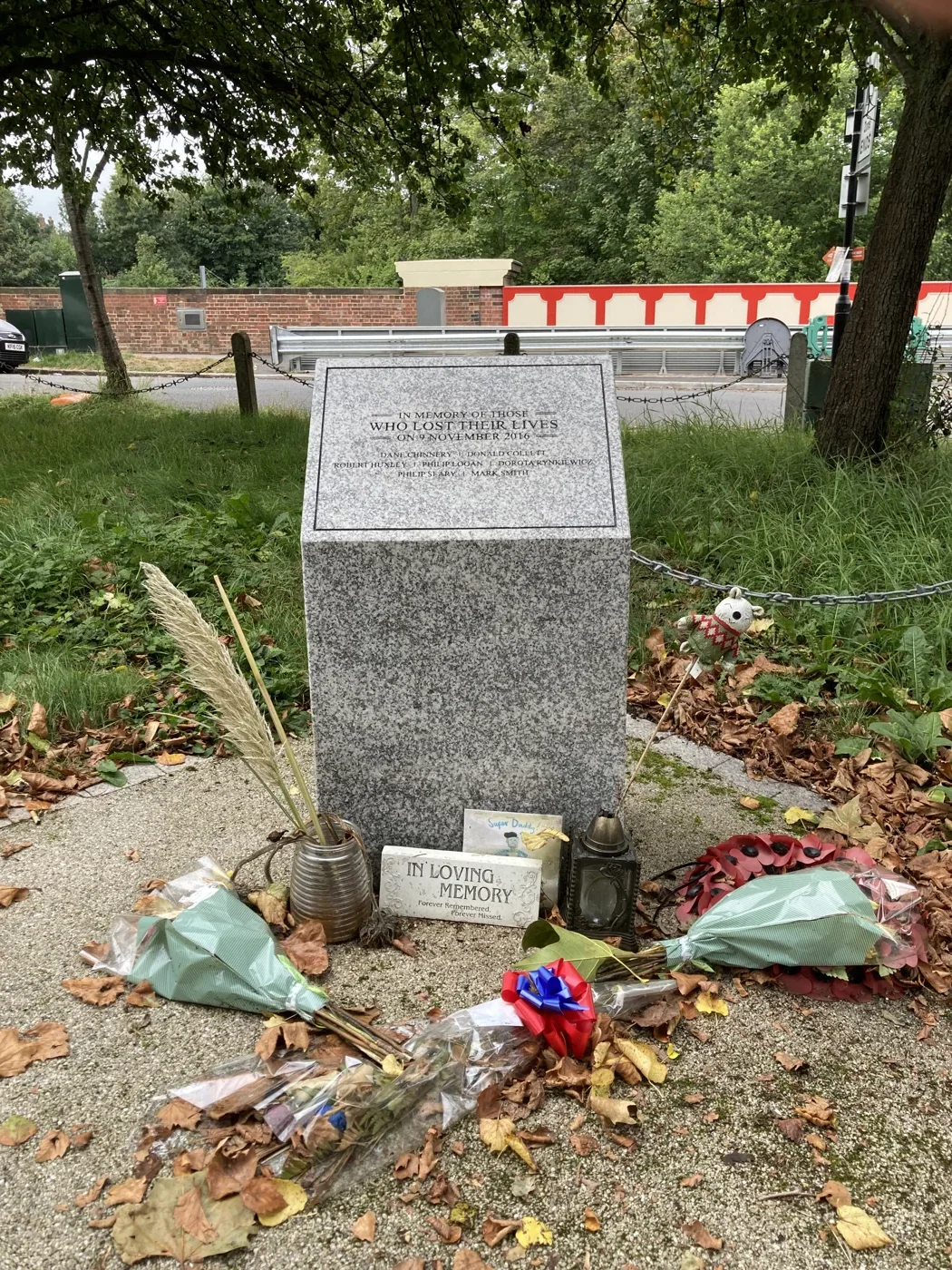

Seven people died at Sandilands on 9 November 2016. Ten years on, the rail regulator lists automatic braking, a 70km/h limit and driver alert devices.
Ten years ago today, on 9 November 2016, a tram overturned on the curve at Sandilands junction and seven people died. Croydon’s public ceremony to remember them was set for 11am today, Monday 9 November, on Market Square in New Addington.
Updated 9 November: on the anniversary, the Office of Rail and Road set out what has changed on Croydon’s trams since 2016. That is in the new section below, “What has changed in ten years”.
The ceremony was arranged for Market Square, Central Parade, New Addington, CR0 0JL, and was open to anyone. The council said residents, loved ones, community representatives and civic leaders would gather “to remember those who died and reflect on the lasting impact of the events of 9 November 2016” (Croydon Council, 21 October).
The seven names
Dane Chinnery, Donald Collett, Robert Huxley, Philip Logan, Dorota Rynkiewicz, Philip Seary and Mark Smith lost their lives when the tram overturned near Sandilands on 9 November 2016. More than 60 people were injured, according to the council.
The ceremony
The council set out the order of the ceremony:
- a reading of the names of those who died
- a period of silence
- the laying of floral tributes
Croydon’s Civic Mayor, Councillor Mohammed Islam, was to be joined by the Executive Mayor, Jason Perry, by some of those directly affected and by survivors. Representatives of the agencies that supported the response were expected too, along with local businesses, community leaders and, the council said, “the wider community”.
What has changed in ten years
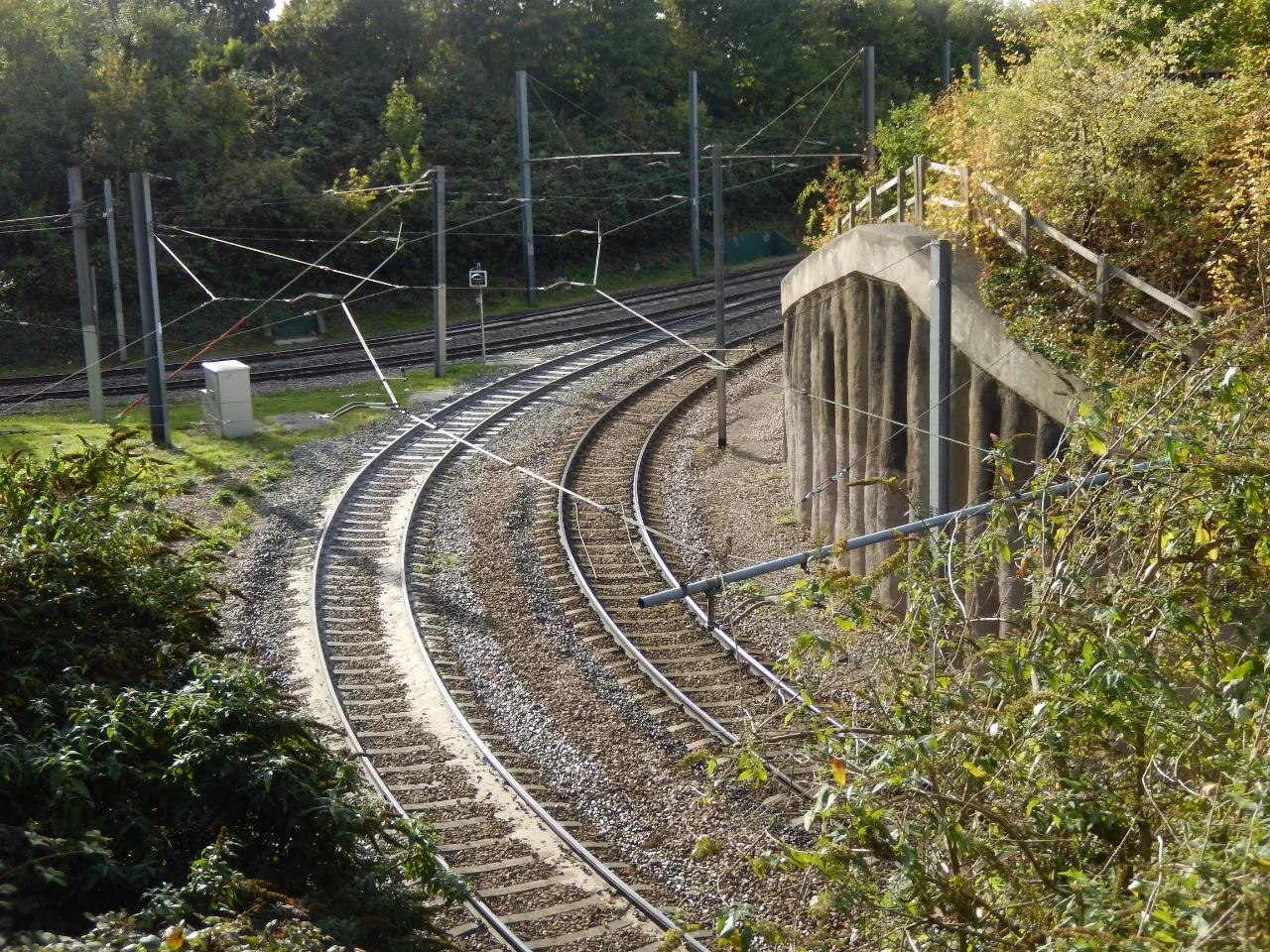
The Rail Accident Investigation Branch published its report on the crash on 7 December 2017. It found that tram 2551 reached the curve at 73km/h. The limit on the curve was 20km/h (RAIB report 18/2017).
Of the 69 passengers on board, seven died and 61 were injured, 19 of them seriously. The branch found nothing on the tram to check the driver was alert, and nothing to brake automatically when it went too fast. It also found the signs warning of the sharp curve were inadequate, and that windows broke when passengers fell against them. It made 15 recommendations.
Richard Hines, HM Chief Inspector of Railways, wrote on the anniversary that those recommendations “ultimately became a true catalyst for change” (Office of Rail and Road, 9 November 2026). He listed what is now in place on Croydon’s network:
- automatic braking that stops trams going too fast at high-risk locations
- devices that check the driver is alert
- stronger speed warnings and better lighting
- revised risk assessments
- a lower top speed across the network, cut from 80km/h to 70km/h
- better evacuation procedures and emergency lighting on board
“Transport for London says all recommendations directed at its network have been completed,” he wrote.
The changes reach beyond Croydon. A Light Rail Safety and Standards Board was set up in 2019 after the investigation, to share risk analysis and set standards for every UK tram system. The regulator’s own record notes that Transport for London and Tram Operations Limited were fined a total of £14m on 27 July 2023, after pleading guilty to health and safety offences (Office of Rail and Road).
Mr Hines said the job is not finished. The regulator’s latest safety report shows “some technical protections are still being implemented across other tram networks”, he wrote. “The most fitting tribute to those affected is to ensure the lessons of Sandilands continue to drive safer journeys for everyone.”
“Croydon will always remember those we lost”
Jason Perry, the Executive Mayor of Croydon, said:
“Ten years may have passed, but the tragedy at Sandilands has never been forgotten by the people of Croydon. Seven lives were lost that day, leaving behind grieving families, friends and a community whose lives were changed forever.
“As we mark this solemn anniversary, our thoughts are first and foremost with those who lost loved ones, those who survived, and everyone who continues to live with the consequences of that terrible day.
“Croydon will always remember those we lost. We owe it to them, and to their families, to ensure their names and their stories are never forgotten. On the anniversary, and always, we stand together in remembrance.”
What it means for you
- Trams today: the New Addington line is running again after the closure east of East Croydon ended. Check TfL’s tram status before you travel.
- The full record: the RAIB report and the regulator’s Sandilands page are both free to read.
If the anniversary is hard for you
The council says it recognises that anniversaries “can bring back difficult memories and emotions”, and points to two places to turn:
- Sarah Hope Line, TfL’s incident support service, gives practical and emotional support to people affected by serious incidents on the TfL network. Call 0343 222 5678, Monday to Friday, 8am to 6pm, or email SHL@tfl.gov.uk.
- Croydon Talking Therapies offers a range of psychological therapies for adults aged 18 and over who are registered with a Croydon GP.
Have your say