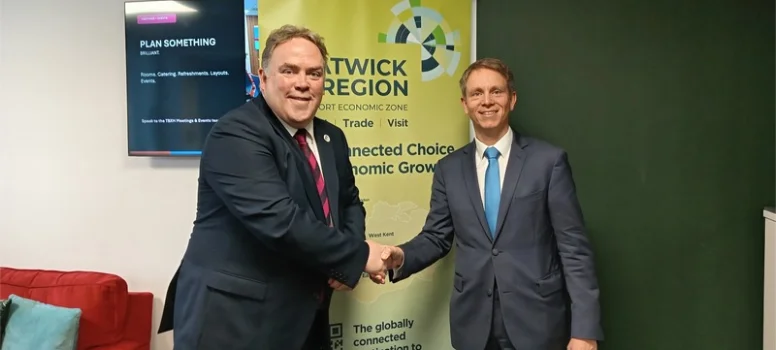

Croydon's mayor and Gatwick's boss have asked the Chancellor to fix the East Croydon rail bottleneck. Every London to Gatwick train passes through it.
Croydon’s Executive Mayor, Jason Perry, and London Gatwick’s Chief Executive, Pierre-Hugues Schmit, have written jointly to the Chancellor of the Exchequer asking the Government to fix the rail bottleneck at East Croydon, the station every train between London and Gatwick has to pass through.
The letter was announced by Croydon Council on Thursday 12 November, the same day both men spoke at the Invest in Croydon conference.
Why East Croydon matters to the whole line
Croydon Council says East Croydon is one of the busiest stations in the country and handles more trains each day than all the intercity operators serving Euston, King’s Cross and St Pancras combined.
It sits on the Brighton Main Line and the Thameslink network, the corridor that links Brighton and the south coast with Gatwick, London, Luton, Bedford, Peterborough and Cambridge. The council says 18% of all national passenger journeys take place on the Greater Thameslink Railway network.
Because every London to Gatwick service runs through East Croydon, the letter argues, a delay there quickly spreads to services across the Brighton Main Line, the Thameslink route and beyond.
The Gatwick runway and the money at stake
The call follows the recent go-ahead for Gatwick’s Northern Runway programme, which the airport says will create around 14,000 jobs and add about £1bn a year to the economy. Mayor Perry put Gatwick’s own private spending on the project at more than £2bn.
The two leaders argue that without more rail capacity, the growth that comes with the runway, from new homes to tourism and private investment, could be held back. Previous modelling, cited in a Commons debate on the Croydon Area Remodelling Scheme in March 2026, suggested that fixing the bottleneck could unlock around £5.1bn of economic value over 20 years. The council says the benefit is likely to be greater now, given how much investment is planned along the corridor.
Rail is also part of the runway’s planning conditions. Around half of Gatwick’s passengers travelled to and from the airport by public transport in 2025, according to the council’s notes, and the Northern Runway consent framework sets a target of 54% by the time both runways are in use. The council says hitting that will need Gatwick, the Government, Network Rail, the train operators and councils to work together, and a railway with the capacity to carry the extra passengers.
What the Croydon Area Remodelling Scheme would do
The Croydon Area Remodelling Scheme was drawn up to deal with the bottleneck. Its proposals included:
- expanding East Croydon station
- remodelling the tracks and junctions around it
- removing conflicting train movements, where one service has to wait for another to cross its path
- improving capacity and reliability across the wider route
What the mayor said
“Croydon sits at the heart of a rail corridor connecting communities, businesses and two major airports,” Mayor Perry said. “Yet a bottleneck here holds back opportunities far beyond our borough.
“Gatwick is investing more than £2bn of private funding in its Northern Runway programme, Britain’s first major runway expansion in a generation.
“We need the railway to support that investment, giving people reliable journeys and businesses the confidence to grow. The return would be felt in jobs, new homes and stronger local economies along the line.
“Working with Pierre-Hugues Schmit and the London Gatwick team, we are taking that case directly to the Chancellor. We will continue bringing together local authority leaders up and down the rail line to press for action. Addressing this bottleneck would improve daily life for our residents and help turn the Government’s aspirations for growth into investment and opportunity.”
What Gatwick said
“Our Northern Runway programme is a major opportunity for the UK, creating around 14,000 jobs and contributing an additional £1bn to the regional economy every year,” Mr Schmit said.
“Reliable, convenient and affordable public transport is central to our growth and to ensuring that its benefits reach businesses and communities across the region. Addressing the Croydon bottleneck would strengthen a vital connection between Gatwick, London and the wider country.
“We are pleased to be working with Mayor Perry and Croydon Council to make this shared case to Government. By planning rail capacity alongside the private investment already committed, we can help secure the greatest possible economic benefit for the UK.”
What happens next
Mayor Perry has already raised the bottleneck with the Secretary of State for Transport. The council says it is ready to work with the Government, Network Rail, Gatwick and partners along the Thameslink corridor on “a practical and deliverable solution”.
The Invest in Croydon conference, run by White Label and partners, brought policymakers, investors, developers and businesses together on 12 November, with transport links one of the themes of the day.
Have your say