
Croydon crisis grants pay up to £500 for food, £200 for fuel and £350 for a white good. Who can apply, what to send, and the new rule on repeat claims.
Croydon residents facing a sudden money emergency can get up to £500 for food, £200 for fuel and £350 for an essential appliance from the council’s new Crisis and Resilience Fund. You do not have to be on benefits to apply.
The Cabinet approved the local rules for the fund on Wednesday night, in a decision published on 23 September. It accepted up to £19.7m from the Department for Work and Pensions for April 2026 to March 2029.
The fund replaces the Household Support Fund, which ran from 2021 to March 2026, and folds in Discretionary Housing Payments. The Cabinet report says plainly that this is not new money. It is the old funding brought together into one three-year grant.
Who can apply for a Crisis Payment
Under the local scheme policy, you must:
- be 18 or over
- live in Croydon
- have had a financial shock, an unexpected cost or a sudden drop in income
- show you do not have enough money of your own to sort out the crisis
People with no recourse to public funds are not eligible. Being on benefits is not a requirement, and the council’s Crisis Payment page says a claim will not affect your benefits.
What it pays for
The policy sets these as typical maximum awards:
| Need | Typical maximum |
|---|---|
| Food | £500 |
| Fuel and utility costs | £200 |
| Essential household appliances | £350 |
The policy says these are a guide, not an entitlement. Awards can go above or below them depending on circumstances and how much money is left. The council’s page lists food vouchers, energy and water bill debt, prepayment meter top-ups and one white good.
How to apply
You apply through the council’s online Crisis Payment form. The council page asks for the following, for every adult in the household:
- the last month’s bank statements, showing the current balance, including joint accounts
- proof of the last month’s income
- proof of identity: passport, driving licence or birth certificate
- evidence of the crisis itself
- a full energy or water bill from the last month, if you want help with bills
Photos and screenshots of documents are accepted. The policy says Crisis Payment applications are normally assessed within 48 hours of the council receiving everything it needs. Requests for goods such as a washing machine can take longer.
If you are refused, you can ask for a review within one calendar month. Crisis Payment reviews are normally completed within 10 working days.
The new rule on coming back
The fund is meant for one-off emergencies, not ongoing living costs. Repeat applications will only be considered in limited cases, according to the policy, such as a new baby, a relationship breakdown, a move, or a fresh shock like losing a job.
There is also a new condition. People who get crisis help will be referred for longer-term support, such as debt or benefits advice. If they apply again, the report says continued help “will normally be conditional on reasonable engagement” with that support, unless something exceptional stopped them.
Housing Payments replace Discretionary Housing Payments
Help with rent now comes through a separate Housing Payment. It can cover:
- a rent shortfall or rent arrears
- rent in advance or a deposit
- removal costs
The council has set aside £1.24m for Housing Payments this year, the same amount it had for Discretionary Housing Payments in 2025/26. The criteria have not changed. The council’s page warns that a payment is not automatic just because Housing Benefit or Universal Credit does not cover your rent.
One exclusion matters in Croydon. Households placed in temporary accommodation in the borough by another council will not normally qualify, and will be told to ask the council that placed them. The council’s temporary accommodation strategy says other councils have placed more than 12,000 households in Croydon.
Where this year’s £6.6m goes
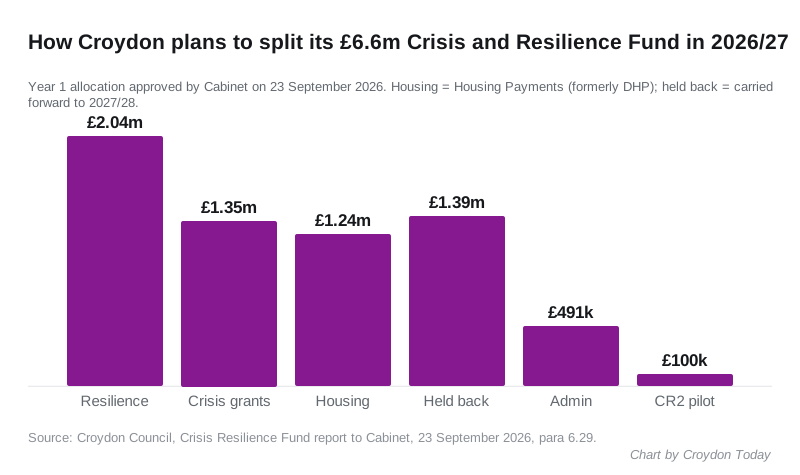
Croydon has £6.61m available in 2026/27. The council has deliberately planned to spend 79% of it this year, because the scheme is starting partway through the year, and will carry £1.39m into 2027/28.
Of the £1.35m for Crisis Payments, £400,000 is kept for families referred by schools. The report says schools are often the first place families turn when something goes wrong.
The largest share, £2.04m, goes on what the council calls resilience: help meant to stop people reaching crisis point again. The main items for this year are:
- Holiday clubs: £631,000 to extend the Holiday Activities and Food programme into the February, May and October half-terms, plus healthy eating and creative health work for families in temporary accommodation
- Move-on fund: £405,000 for deposits, rent in advance and arrears so households can leave temporary or supported accommodation, including £5,000 for cots and safe-sleeping kit for babies in temporary accommodation
- Schools: £366,000 of discretionary money, which the report describes as £3,000 per school, shared out by the number of pupils on free school meals
- Care leavers: £256,000, with up to £3,000 each for 80 young people setting up their first home
- Citizens Advice Croydon: £162,500 this year for advice and casework for an extra 4,000 to 5,000 clients
- Mayor’s Employment Fund: £87,500
- Age UK Croydon: £80,190 for benefits, debt and income advice for people aged 55 and over
- Family Help pilot in CR2: £100,000
The report does not say when the extra half-term holiday clubs will start.
How many people asked for help last year
In 2025/26 the council received 6,599 Household Support Fund applications and 2,585 Discretionary Housing Payment applications. The report says 85% to 92% of applicants were on low incomes or benefits. Over half the Household Support Fund applications came from households with children, 55% of applicants reported a health condition and 22% had caring responsibilities.
What it means for you
- If you are in an emergency now, apply online and have a month of bank statements and proof of income ready for every adult at home. The council’s page warns that applications can be delayed without the right details.
- If your child’s school is aware of your situation, ask whether it can refer you. Schools have their own share of the crisis money this year.
- If you are behind on rent, apply for a Housing Payment rather than a Crisis Payment, and do it before the arrears reach a notice.
- If you have had help before, expect to be asked whether you took up the advice you were offered.
Questions go to the council’s Enablement support team at hpayments@croydon.gov.uk. The decision is subject to call-in by councillors. At the same meeting, the Cabinet approved a consultation on changes to Council Tax Support for 2027/28, which would affect many of the same households.
Have your say