

Croydon wants about 720 fewer households in temporary accommodation by 2030. Its own papers show 12,000 households placed in the borough by other councils.
Croydon has 3,283 homeless households living in temporary accommodation, and housing them costs the council about £45m a year. On Wednesday night the Cabinet approved a four-year plan to bring that number down to around 2,563 by 2029/30.
The figures come from the Cabinet report on the Temporary Accommodation Strategy 2026 to 2030. The council announced the decision in a press release on Thursday.
The target is a cut of about 23% from the 3,322 households the council counted in 2025/26. It expects the plan to save around £10m between 2027 and 2030.
Where the money goes
Nightly paid accommodation is the expensive part. It houses 1,930 of the 3,283 households, and the report says it accounts for around 90% of the cost.
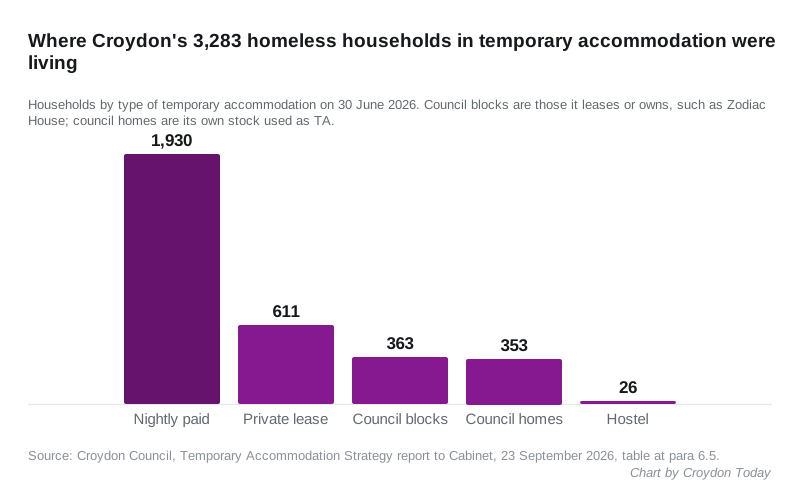
The breakdown on 30 June 2026 was:
- nightly paid accommodation: 1,930 households
- private sector leased homes: 611
- blocks the council leases or owns: 363
- council homes used as temporary accommodation: 353
- hostels: 26
The biggest single need is for two-bedroom homes, with 966 households waiting in temporary accommodation for one. Another 626 need a studio.
The £10m of savings breaks down in two parts, according to the report:
- about £4m from having fewer households in temporary accommodation
- about £6m from renegotiating the rates the council pays providers for older nightly paid placements
The council’s press release says around 1,500 existing high-cost placements will be brought down to its revised price caps. It also says the council wants fewer than 1,000 households in nightly paid accommodation by 2030.
The subsidy gap
Part of the bill is set in Whitehall. Housing Benefit subsidy for temporary accommodation is still tied to Local Housing Allowance rates from January 2011.
The report estimates that updating those rates would be worth about £13m a year to Croydon. Even then the council would still face a net cost of around £32m a year. Mayor Jason Perry says in the report that he will keep pressing the government for reform, “but we cannot simply wait for ministers to act.”
12,000 households placed in Croydon by other councils
The report contains a figure the press release leaves out. Pan-London placement data shows Croydon placed roughly 5,000 to 5,500 households in other boroughs. Over the same period, other councils placed more than 12,000 households into Croydon.
That is roughly two households placed into Croydon for every one the council places elsewhere. Neither document says what period the data covers. The report says those placements add to competition for private rented homes and put pressure on local services. The council has identified about 500 children and young people and 83 working-age adults with disabilities who were placed in Croydon by other councils and need some level of support.
The council says it is working with London Councils to improve oversight of cross-borough placements and make other boroughs follow the rules on telling the receiving council.
By a different measure, Croydon keeps more of its own residents close to home than most boroughs. The strategy document puts its out-of-area placement rate at 29.3% at the end of 2025, against a London average of 46.8%.
Demand is the highest in London
Croydon received 5,225 homelessness applications across the five quarters from December 2024 to December 2025, according to the strategy. That is the highest total of any London borough, just ahead of Newham on 5,202.
The strategy lists the most common reasons people come to the council as homeless:
- family or friends no longer able to put them up
- losing a private rented home
- domestic abuse
- eviction from supported housing
- leaving Home Office asylum accommodation
Social housing does not come close to meeting the demand. The report counts more than 8,500 households on the housing register and around 650 social lettings a year. The press release uses slightly higher figures, 8,600 and 680.
How long people stay
The strategy gives the average length of stay by type of temporary accommodation, from government figures for December 2025:
| Type of accommodation | Average stay |
|---|---|
| Council stock used as temporary accommodation | about 7 years |
| Private sector lease | about 6 years |
| Council-owned or leased blocks (Concord, Sycamore, Windsor and Zodiac House) | about 2.5 years |
| Nightly paid | about 2 years |
The strategy says the council stock placements are self-contained homes that are in many ways like permanent housing. The difference is that the household does not have a secure tenancy.
What the council says has already changed
The report lists progress since 2024:
- the largest fall in temporary accommodation numbers of any London borough during 2025
- no more commercial hotels, family bed and breakfast placements or split-family placements
- more than 300 households moved from temporary accommodation into social housing
- more than 200 temporary homes recovered through fraud and occupancy checks
- care leavers in temporary accommodation down from about 700 to about 100
- the share of homelessness applications ending in a new placement down from 25% in 2024/25 to 13% in 2025/26
The strategy is also frank about a weak spot. In March 2025, only 3% of Croydon’s homelessness prevention and relief cases ended with the household securing somewhere to live, against a London average of 35%. That rose to 26% by December 2025, still below the London average of 40%.
What happens next
An “invest to save” bid goes to the October Cabinet as part of the draft 2027/28 budget. It covers a homelessness team, financial incentives for providers and other projects to deliver the strategy. The report says each project will be tested for value for money before it starts.
Progress will be reported to Cabinet once a year. The decision is subject to call-in, so councillors can still ask for it to be reviewed before it takes effect.
What it means for you
- If you are at risk of losing your home, the whole strategy depends on the council reaching people earlier. Contact the council’s housing service as soon as you get a notice, not when you are about to leave. Housing costs help, such as rent arrears or a deposit, may come from the council’s Crisis and Resilience Fund.
- If you are already in temporary accommodation, the council intends to move more households into longer leases and council-controlled homes, and to renegotiate what it pays nightly providers. It has not said which placements will move or when.
- If you pay council tax, temporary accommodation is one of the largest pressures on the budget. The October budget papers will show how much the council plans to spend to get the savings.
The strategy is the same plan behind two stories we reported this month: the new homeless day centre on London Road and the council’s crackdown on subletting council homes.
Have your say